
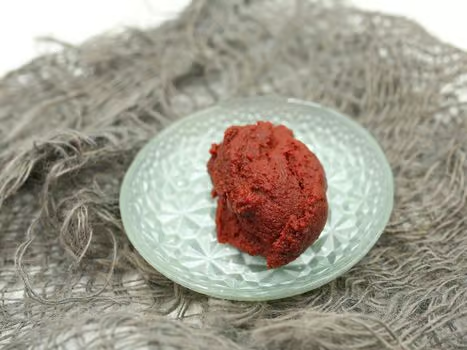
Kavalactone Paste
What kavalactone paste is and why people use it
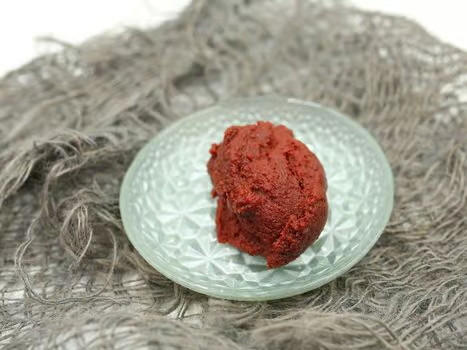
Stress that sits in your shoulders, a restless mind at night, or a desire for a stronger kava product than a standard drink often leads people to kavalactone paste. This concentrated form of kava is made to deliver the plant’s active compounds, called kavalactones, in a smaller serving than traditional root powder. Instead of preparing a full beverage, some people use paste for convenience, portability, or more direct portion control.
Kavalactones are the naturally occurring compounds in kava associated with its calming and relaxing effects. In a paste, those compounds are concentrated into a thick extract that may be taken on its own, mixed into a drink, or added to another preparation depending on the product’s directions. Because it is more concentrated than many other forms, the experience can feel different from a traditional bowl of kava prepared from root. The onset, flavor, serving size, and intensity may all vary.
Not all pastes are made the same. Some are produced from noble kava varieties and emphasize a balanced effect profile, while others may focus on stronger body relaxation or a heavier, more sedating feel. Labels may list total kavalactones, extraction method, and ingredients such as coconut oil, glycerin, or lecithin used to create a workable paste texture. Those details matter because they affect potency, absorption, and overall user experience.
For most people, the key question is not just what kavalactone paste is, but whether it fits their goals better than root powder, instant kava, or capsules. The answer depends on whether convenience, taste, strength, and careful serving control matter more than the ritual and slower pace of traditional preparation.
How to read a kavalactone paste label
A good label tells you much more than the product name. Start with the total kavalactone content per serving and per container. This is one of the clearest ways to compare products because two pastes can look identical while delivering very different amounts of active compounds. A tiny serving from one product may equal several servings of another.
Next, check the ingredient list. A straightforward paste may contain kava extract plus a carrier such as oil or glycerin. Fewer ingredients can make it easier to understand what you are taking, but the best formula depends on your preferences and sensitivities. If the product includes sweeteners, flavorings, or additional herbs, consider whether those add anything useful or simply change the taste.
Look for information about the source material. Products made from noble kava are generally preferred for routine use. It also helps to see whether the maker identifies the plant part used and whether the extract comes from root material rather than leaves or stems. Transparent sourcing is a practical sign that the manufacturer understands the standards consumers care about.
Pay attention to the serving instructions. Because paste is concentrated, a serving may be very small, sometimes measured in pea-sized amounts, fractions of a teaspoon, or a marked applicator. Avoid guessing. Read whether the product is meant to be swallowed directly, blended into liquid, or taken with food. Finally, review any safety notes, including warnings about drowsiness, alcohol use, medications, or use before driving. A strong product is only useful when the label makes it possible to use it carefully and consistently.
Using kavalactone paste safely and effectively
The most practical approach with kavalactone paste is to start low and wait. Because it is concentrated, taking more too quickly is one of the most common mistakes. Begin with the smallest listed serving on the label, then give it enough time to gauge the effect before considering more. The exact timing can vary by formulation and whether you have eaten recently, so patience matters.
Measure carefully instead of estimating. If the label uses teaspoon fractions, use a measuring spoon. If it describes a pea-sized amount, keep that serving visually consistent each time. Tracking your serving, timing, and effect for the first few uses can help you find a repeatable routine rather than relying on memory. This is especially useful because different kava extracts can feel noticeably different even when their labels seem similar.
Many people find that taking paste with a small amount of food helps with comfort, especially if they are sensitive to strong herbal concentrates. Others prefer mixing it into a beverage to soften the taste and spread out the texture. Follow the product directions first, then adjust only within those boundaries. Avoid combining it with alcohol or other substances that increase sedation unless a qualified medical professional has said it is appropriate for your situation.
It is also wise to think about timing. A concentrated kava product may be better suited to evenings or low-demand periods, particularly the first few times you use it. Do not plan to drive, operate equipment, or handle tasks that require sharp coordination until you know how your body responds. Safe use is less about finding the strongest effect and more about finding the smallest effective amount that delivers the calm or relaxation you actually want.
Kavalactone paste compared with powder, instant kava, and capsules
Kavalactone paste sits in a middle ground between traditional preparation and highly convenient extract products. Compared with traditional root powder, paste is usually faster and less bulky. You do not need to knead or strain a full batch, and the serving size is much smaller. The tradeoff is that you lose some of the ritual, and the experience may feel less like a classic kava session depending on the extract and formulation.
Compared with instant kava, paste is often more concentrated and sometimes more economical by active content, though that depends on the label. Instant products are usually easier to dissolve and may taste more familiar in a drink. Paste can be messier, thicker, and stronger in flavor, but it may offer more flexibility for people who want a compact extract they can portion carefully.
Compared with capsules, paste usually gives you more direct visibility into the actual amount you are taking. Capsules are convenient and discreet, but they can limit fine-tuning because you are locked into fixed amounts. Paste allows smaller adjustments, which can be helpful if you are trying to identify your preferred serving. On the other hand, capsules are simpler for people who dislike kava’s taste or texture.
The right format depends on what matters most to you. Choose root powder if you value tradition and a fuller preparation experience. Choose instant if you want speed with a beverage format. Choose capsules if simplicity matters most. Choose paste if your priorities are concentration, portability, and adjustable serving size. The best product is not necessarily the strongest one; it is the one you can use consistently, understand clearly, and fit into your routine without guesswork.
Common mistakes to avoid before buying or trying a paste
One of the biggest mistakes is assuming all kava concentrates are interchangeable. They are not. A paste labeled with a similar total weight may be far stronger or weaker than another depending on the percentage of kavalactones and the ingredients used to carry the extract. Always compare by active content and serving guidance, not by container size alone.
Another common issue is overlooking the type of kava. Products that do not clearly identify noble kava sourcing or fail to explain what plant parts were used leave important questions unanswered. Lack of detail does not automatically mean a product is poor, but transparency makes it easier to evaluate quality and consistency. A vague label creates unnecessary risk, especially with concentrated products.
People also run into problems by taking too much on the first try. Concentrated extracts can encourage a “small amount must mean mild effect” mindset, which is not reliable. Respect the serving instructions, wait long enough, and avoid stacking multiple doses quickly. Taking notes on your first few sessions can prevent repeated trial-and-error and help you identify whether the product is actually suitable for your goals.
Finally, do not ignore practical factors like taste, storage, and texture. Some pastes are sticky, oily, or difficult to portion cleanly. Others may separate or become easier to handle at certain temperatures. Read storage instructions and user directions carefully so the product stays stable and usable. A paste that looks potent on paper but is frustrating to measure or unpleasant to take may not be the best fit. The smartest purchase is one that balances clear labeling, realistic serving control, and a form you will actually use correctly.
Ready to Experience Noble Kava?
Shop our premium selection of noble kava root powders, capsules, tinctures, and drinks — sourced from Hawaii, Fiji, Vanuatu, and the Solomon Islands.
Ready to Experience Noble Kava?
Shop our premium selection of noble kava root powders, capsules, tinctures, and drinks — sourced from Hawaii, Fiji, Vanuatu, and the Solomon Islands.
