
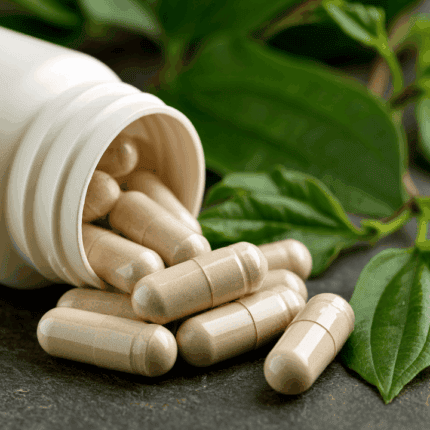
What kavalactone 30% capsules are and what the 30% label means
kavalactone 30% capsules are dietary supplements made from kava extract that has been standardized so that about 30% of the extract consists of kavalactones, the compounds most associated with kava’s calming effects. For shoppers, that percentage matters because it gives a clearer way to compare products than looking only at total capsule weight. A 500 mg capsule of plain root powder is very different from a 500 mg capsule of concentrated extract, and the label should help you tell which one you are buying.
When a product says 30% kavalactones, it usually means each serving delivers a predictable amount of active compounds. For example, a 200 mg extract capsule standardized to 30% would provide about 60 mg of kavalactones. This does not automatically make it stronger in practice than every other product, because the source material, extraction method, and ratio of individual kavalactones also affect how the supplement feels. Still, standardization is useful if you want more consistent dosing from one serving to the next.
To read the label correctly, look for a few specific details. First, identify whether the ingredient is listed as kava root extract, noble kava extract, or simply kava powder. Second, check whether the product states the amount of extract per capsule and the standardized kavalactone percentage. Third, review the serving size, because some brands list kavalactones per capsule while others list them per two-capsule serving. Finally, scan the inactive ingredients so you know whether the capsule includes fillers, black pepper extract, or other herbs that may change how it works for you.
If your goal is calm without guesswork, choosing a standardized extract can be more practical than choosing a non-standardized powder. The 30% figure is best understood as a tool for comparing products and estimating intake, not as a guarantee of quality by itself. Quality depends on transparency, sourcing, testing, and clear dosing instructions.
How to compare kavalactone 30% capsules before you buy
People searching for kavalactone 30% capsules usually want a product that is easy to dose, consistent from batch to batch, and less confusing than traditional kava drinks. The best way to compare options is to calculate the actual kavalactone content per serving, then verify quality markers that go beyond the front label. Start with the math: multiply the extract amount by 0.30. If one capsule contains 250 mg of extract, that equals 75 mg of kavalactones. If another contains 150 mg, that equals 45 mg. This lets you compare value and expected potency more accurately.
- Check the plant part: Look for root-based products rather than supplements that use aerial parts such as stems or leaves.
- Look for standardized extract details: The label should clearly state the extract amount and the 30% standardization.
- Review third-party testing: Certificates or testing statements can help confirm identity, purity, and contaminant screening.
- Read the ingredient list: Simpler formulas are easier to evaluate, especially if you are sensitive to additives.
- Note capsule count and serving size: A lower-priced bottle may provide fewer effective servings than it first appears.
Also pay attention to the extraction language. Some labels mention water extraction, CO2 extraction, or solvent extraction, but not all explain what that means for the final product. While extraction method alone does not determine quality, transparency is a positive sign. Products that disclose the extract ratio, source region, and standardized content are often easier to assess than vague formulas.
Finally, use reviews carefully. The most useful reviews describe dosage, timing, and effect in a practical way rather than making dramatic claims. Focus on patterns: digestive tolerance, consistency between bottles, and whether users found the label easy to understand. A good buying decision comes from label clarity, measurable content, and safety information, not hype.
How to use kavalactone 30% capsules safely and effectively
Using kava capsules well starts with a cautious, structured approach. Because standardized extracts can be more concentrated than plain root powder, begin with the lowest suggested serving on the label and give your body time to respond. Many users make the mistake of taking more too quickly, especially if they are expecting the same experience they would get from a beverage. Capsules may feel more subtle at first, and effects can vary based on body size, food intake, and the specific extract profile.
- Read the serving instructions fully: Confirm whether the label refers to one capsule or multiple capsules as a serving.
- Start low: Use the minimum labeled amount, especially if you have never taken kava before.
- Track timing: Note whether you took it with food, how long it took to notice effects, and how you felt afterward.
- Avoid combining with alcohol or sedating substances: This reduces the risk of excessive drowsiness or unwanted interactions.
- Do not exceed the label: More is not always better, and consistent use at moderate amounts is easier to evaluate.
It is also wise to avoid driving or operating machinery until you know how the supplement affects you. Some people feel relaxed but clear-headed, while others may feel sleepy. If you take medications, have a liver condition, are pregnant, or are breastfeeding, it is especially important to speak with a qualified healthcare professional before use. Kava is not appropriate for everyone, and individual risk factors matter.
For practical use, keep a simple log for the first week. Write down the capsule amount, time taken, whether you ate beforehand, and the effect after one to three hours. This helps you identify your ideal routine and avoid unnecessary increases. A measured approach is the most reliable way to use a standardized kava product responsibly.
Expected effects, timing, and what results are realistic
One of the biggest questions buyers have is what they should realistically expect from a 30% standardized kava extract. In general, people choose kava for a sense of relaxation, reduced mental tension, or easier unwinding in the evening. That said, the experience is not identical for everyone, and capsules are often less ritual-based and less immediately noticeable than traditional prepared kava beverages. The goal should be measured support, not a dramatic effect.
Timing varies. Some users notice effects within 30 to 90 minutes, while others report a slower onset depending on whether the capsules were taken with food and how concentrated the formula is. A standardized extract can help with consistency, but there are still several variables: the amount of total kavalactones taken, the balance of individual kavalactones, your sensitivity, and whether other ingredients are included in the formula. If you do not feel much from the first serving, that does not always mean the product is ineffective; it may mean you need more time to evaluate how your body responds within the labeled range.
- Commonly reported effects: calmness, less tension, a more settled mood, and mild physical relaxation
- Less desirable effects: drowsiness, stomach upset, headache, or feeling too subdued
- Factors that change the experience: dose, timing, food intake, product quality, and personal sensitivity
A realistic benchmark is consistency rather than intensity. If a product helps you feel more relaxed in a predictable way at the same serving size, that is usually a better sign than a supplement that feels strong one day and weak the next. Standardized capsules are often chosen for convenience and repeatability, so judge them on those terms. Use the label, your experience log, and a cautious dosing routine to decide whether the product matches your needs.
Label red flags, storage tips, and common buying mistakes
Even when a product appears straightforward, there are several red flags that can make comparison difficult. The first is a label that emphasizes capsule weight but does not clearly state the amount of extract or the standardized kavalactone percentage. Another issue is proprietary blends, which can hide how much kava you are actually getting. For a searcher trying to evaluate a 30% product, transparency is essential. If the math cannot be done from the label, move on to another option.
- Red flag: no clear standardization statement
- Red flag: no mention of root sourcing or plant part used
- Red flag: vague blend names with no exact amounts
- Red flag: missing lot information or no testing details
- Red flag: exaggerated claims that promise immediate or extreme effects
Storage matters too. Keep capsules in a cool, dry place away from heat, humidity, and direct sunlight. Do not store them in a bathroom cabinet if the room becomes humid after showers. Leave the desiccant packet in the bottle if one is included, and always close the lid tightly. Proper storage helps preserve potency and reduces the chance of moisture damage, especially with plant extracts that can degrade over time.
Common buying mistakes include assuming a larger milligram number means a stronger product, ignoring serving size, and skipping the inactive ingredients list. Another frequent error is changing products too quickly without tracking your response to one standardized formula first. If your goal is to find a dependable supplement, compare the real kavalactone amount per serving, verify label transparency, and store the product correctly once it arrives. Those simple steps prevent most of the confusion buyers run into when shopping online.
Ready to Experience Noble Kava?
Shop our premium selection of noble kava root powders, capsules, tinctures, and drinks — sourced from Hawaii, Fiji, Vanuatu, and the Solomon Islands.
Ready to Experience Noble Kava?
Shop our premium selection of noble kava root powders, capsules, tinctures, and drinks — sourced from Hawaii, Fiji, Vanuatu, and the Solomon Islands.
