
A Mother’s Moment of Peace: Celebrating with Kava
Why a Calm-Focused Mother’s Day Resonates With So Many Families
Mother’s Day often centers on brunch reservations, flowers, and packed schedules, but many families are rethinking what celebration really means. For a lot of mothers, the most meaningful gift is not another item on the counter or another obligation on the calendar. It is a genuine chance to slow down, breathe, and feel cared for. That is where kava enters the conversation as a wellness ritual built around rest, quiet, and presence.
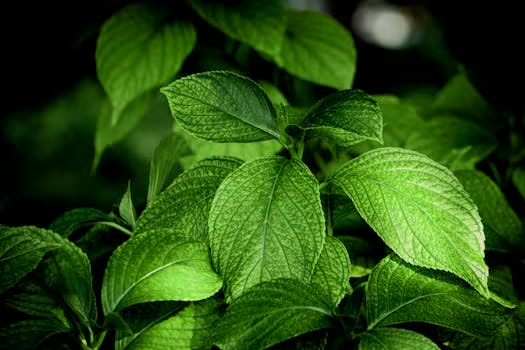
Kava, a traditional beverage prepared from the root of the Piper methysticum plant, has long been associated with relaxation and social connection in Pacific Island cultures. In today’s fast-moving routines, that idea feels especially relevant. Mothers frequently carry invisible mental loads, from managing school schedules and work deadlines to caregiving and household logistics. Even when a day is meant to honor them, they may still be the ones planning it. A calming ritual can help shift the focus from performance to restoration.
For readers across the country, this matters because stress and mental fatigue are not limited to one lifestyle or one age group. Whether someone is parenting toddlers, supporting adult children, caring for aging relatives, or balancing all of that with a career, the need for a moment of peace is real. Kava is increasingly being explored as part of that pause. It is not a cure-all, and it should not be treated like one, but it can fit into a broader self-care routine designed to reduce overstimulation and encourage intentional downtime.
The practical takeaway is simple: celebrations do not have to be loud to be meaningful. A Mother’s Day centered on calm can look like:
- Setting aside uninterrupted quiet time rather than filling every hour
- Creating a simple evening ritual with a comfortable seat, soft lighting, and a warm or chilled kava drink
- Reducing decision-making pressure by planning the details in advance
- Respecting what rest looks like for that person, whether that means solitude, conversation, or early sleep
In other words, the broader message is bigger than one holiday. It is about recognizing that calm is not a luxury. For many mothers, it is an essential form of care.
What Kava Is and Why It Is Often Linked to Relaxation
Kava has gained wider attention in recent years as more Americans look for alternatives to high-stimulation routines and alcohol-centered social habits. Made from the root of a plant native to the South Pacific, kava has a long cultural history and is traditionally prepared as a drink. Its reputation is tied to feelings of calm, ease, and mental unwinding, which is why it is increasingly mentioned in conversations about stress management and mindful rituals.
For readers who are new to it, kava is best understood as a beverage associated with relaxation rather than productivity. People often describe the experience as helping take the edge off after a demanding day. That can be especially appealing for mothers who spend much of their time in constant motion, mentally tracking tasks long after the visible work is done. The appeal is not about escaping responsibility. It is about creating a boundary between the demands of the day and a more restful state of mind.
Context matters here. Kava should be approached with respect, moderation, and awareness of individual health needs. It can affect people differently, and readers should pay attention to product quality, serving guidance, and any medical considerations. Someone who is pregnant, breastfeeding, taking medications, or managing a health condition should speak with a qualified healthcare professional before trying it. That kind of caution is part of responsible self-care, not a barrier to it.
For those considering kava as part of a Mother’s Day ritual, a few grounded steps can help:
- Learn the basics first so the drink feels intentional rather than trendy
- Choose a setting that supports relaxation, such as a quiet porch, reading corner, or post-dinner wind-down
- Start with a modest amount and avoid combining it with anything that may complicate its effects
- Pay attention to how the body responds instead of expecting a dramatic experience
Why does this matter for readers? Because wellness habits are most useful when they are realistic. Kava may offer a gentle way to mark a transition into rest, and that can be valuable for anyone trying to build more breathing room into a demanding season of life.
How a Simple Kava Ritual Can Support Mental Reset and Self-Care
One reason this topic resonates is that self-care is often framed as something expensive, time-consuming, or difficult to maintain. In reality, the most effective routines are usually the ones people can repeat without stress. A kava ritual, when approached thoughtfully, can be one of those low-pressure habits. The value is not just in the drink itself. It is in the structure around it: a deliberate pause, a quieter environment, and permission to be off duty for a moment.
For mothers, that matters because mental fatigue is not always obvious from the outside. It can show up as irritability, trouble focusing, emotional exhaustion, or the sense of always being “on.” A calming ritual can help signal that the day is shifting gears. That transition is important. Without it, many people move straight from responsibility into restless scrolling, late-night chores, or poor-quality downtime that does not actually restore them.
A useful ritual does not need to be elaborate. It can be as simple as preparing kava after the busiest part of the day is over, sitting down without multitasking, and pairing the moment with something soothing such as music, journaling, or silence. The consistency is what gives the ritual meaning. Over time, even a short pause can become a dependable cue for the mind and body to slow down.
Readers looking for practical actions can focus on a few basics:
- Protect 15 to 30 minutes where someone else handles interruptions if possible
- Remove extra stimulation by dimming lights and putting the phone aside
- Pair the ritual with one calming activity, like reading, stretching, or deep breathing
- Keep expectations realistic; the goal is a moment of peace, not a total reset of every stressor
This is relevant beyond Mother’s Day because sustainable self-care works best when it is woven into ordinary life. A ritual centered on calm can help mothers feel less depleted and more grounded, and that has ripple effects in every household. When one person gets a real chance to decompress, the entire rhythm of the evening can improve.
What Families Should Keep in Mind Before Making Kava Part of the Celebration
Any conversation about kava and relaxation should include practical considerations. Readers deserve more than a feel-good wellness headline. If families are thinking about including kava in a Mother’s Day plan, it helps to approach it with the same care they would bring to any new routine. The goal is to create a peaceful experience, not an impulsive one.
First, timing matters. A calming ritual works best when the rest of the schedule supports it. If the day is crowded with travel, restaurant waits, and back-to-back obligations, the relaxing part can end up feeling rushed. A better approach may be to build the ritual into the quieter part of the day, such as after dinner or during an uninterrupted afternoon break. Second, environment matters. A peaceful setting can make a bigger difference than people expect. If children, relatives, or guests are still relying on mom to coordinate everything, the benefit of the ritual may disappear.
It is also important to remember that not every mother will want the same kind of celebration. Some may enjoy a shared kava moment with a partner or close friends. Others may prefer complete solitude, a blanket, and no conversation at all. The point is not to impose a wellness trend. It is to support what genuinely feels restorative for that person.
Families can make the day more effective by focusing on supportive actions such as:
- Taking over logistics so the person being honored is not still managing the plan
- Asking what rest actually looks like instead of guessing
- Keeping the schedule flexible so calm is not squeezed between obligations
- Being mindful of health and safety considerations before introducing any new beverage or routine
Why does this matter nationally? Because the pressure to make holidays look perfect often leaves little room for what people actually need. A more thoughtful celebration can replace performative busyness with something far more useful: real relief, even if it only lasts half an hour.
The Bigger Takeaway: Peace Can Be a Meaningful Gift, Not an Afterthought
The larger idea behind a kava-centered Mother’s Day is not really about novelty. It is about redefining what care looks like. In many households, mothers are expected to keep things running smoothly even on the days meant to celebrate them. That pattern can make traditional gestures feel incomplete. A calmer, more intentional experience acknowledges that emotional labor and mental overload are real, and that rest deserves to be treated as something valuable.
This shift matters for readers because it reflects a broader change in how many Americans are thinking about wellness. People are paying more attention to burnout, overstimulation, and the need for rituals that help them slow down. Kava fits into that conversation as one possible tool for relaxation, but the deeper lesson is more universal: meaningful self-care is often quiet, simple, and personal.
For mothers themselves, one takeaway is that asking for peace is not selfish. Wanting less noise, fewer decisions, and a little time to decompress is a reasonable need. For partners, children, and relatives, the lesson is that support is most powerful when it removes pressure rather than adding to it. A calm evening, a protected block of time, and a setting that invites exhaling can be more memorable than a packed itinerary.
If readers want to apply this idea beyond the holiday, they can start small:
- Choose one evening each week for a low-stimulation wind-down ritual
- Build in recovery time after especially demanding days
- Normalize rest as part of health, not as a reward that must be earned
- Use celebrations to reduce stress rather than adding more of it
That is the practical relevance of this story. Whether or not kava becomes part of the routine, the message lands clearly: giving a mother a true moment of peace can be one of the most thoughtful ways to celebrate her. In a culture that often rewards constant output, choosing calm is a meaningful act.
Source
Based on reporting from Wakacon.
Ready to Experience Noble Kava?
Shop our premium selection of noble kava root powders, capsules, tinctures, and drinks — sourced from Hawaii, Fiji, Vanuatu, and the Solomon Islands.
