

How to Harvest Kava
 There is a lot of data regarding the consumption of Kava (Piper methysticum), but finding genuine and in-depth information regarding How to Grow & Propagate Kava. This informative article will cover another key aspect of Kava Kava;how to harvest Kava. We’ll discuss the parts of the plants, the parts that may be poisonous, as well as the components within Kava that are responsible for the many different effects of Kava.
First of all, know that it takes a minimum of 2-3 years for a Kava plant to reach maturity. Plants that are 5-10 years or more are highly prized for the most effective and robust Kavalactone lineups. It’s a complex plant, with at least 15 identified lactones, and a number of other constituents that add up to the amazing panacea that this ancient medicinal, recreational, and ceremonial plant has to offer. Remember that we’re harvesting the roots (and only the roots) of this amazing plant; something in How to Harvest Kava 101 is the fact that the stems and shoots and leaves are never used for anything other than mulch for the next generations of Kava plants.
I can’t stress this one point enough, and it’s important enough to devote a few lines to this right now. Let’s discuss the parts of the Kava plant, from the very top down to the roots underground, so you can know what to look for when buying Kava, as well as how to safely and effectively harvest the plant if you happen to be growing it yourself:
- Flowers
- Leaves
- Stems
- Nodes
- Basal Stems
- Chips
- Peelings
- Lateral Roots
- Underground Roots
Flowers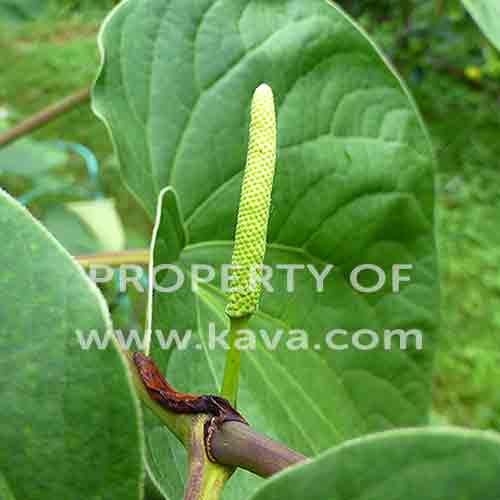
Kava only propagates through cuttings as 100% of the flowers are sterile. The flowers are bright yellow, and appear and differing times throughout the year. I’ve most-often seen flowers appear in the fall, and a Kava plant covered in flowers can be quite a curious sight, probably due to the phallic nature of the flowers. Here is a flower, up close from one of our Nene Kava plants. the flowers can get to be up to about 6 inches in length, and sprout from any available node on the plant. As you can see from this flower, it’s extending from a previously pruned node. The flowers are never consumed, even in teas, although little testing has been completed on flowers.
Leaves
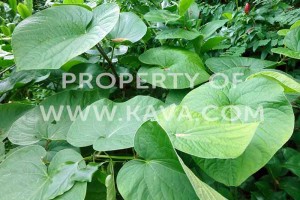
Ahh, those beautiful heart-shaped leaves of the Kava plant are a sight to behold. The leaves are velvety and never waxy or shiny. Happy leaves can reach over 12″ in length, and will always be a deep, rich green.
[PAGE IN PROGRESS AS OF 25 OCT 2015}
