
A Brief History of Kava: 3,000 Years Across the Pacific
Throughout the Pacific Islands, there is cultivated a shrub that produces a slightly bitter, aromatic, resinous brew. Now found across the South Pacific and as far east as Hawaiʻi, botanists believe kava (Piper methysticum) originated in the archipelago of Vanuatu — possibly on Pentecost Island.
Traditional Preparation
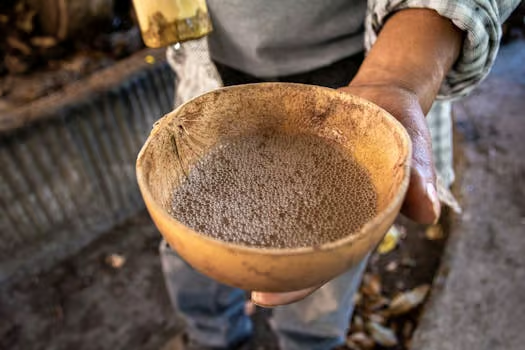
In its oldest form, kava was prepared by chewing the root. The alkaline saliva and its enzymes promote extraction of the active kavalactones. The resulting mixture was diluted with water and strained into coconut bowls. Kava brews produce relaxation, calm, and mental tranquility without loss of clarity — active conversation and storytelling are traditional companions to the evening kava ceremony.
The Samoan Origin Story
Samoa holds perhaps the greatest historical reverence for kava. In Samoan legend, kava was first given by the Sun God to Tagaloa Ui, the first high chief of the Samoan people. The myth traces a journey from a celestial marriage through sacrifice and resurrection — with kava at its center as a sacred gift connecting the divine and the mortal. Rituals since that day involve the clapping of hands and the call of “soifua” — meaning life.
Kava Today
Kava bars are becoming the coffeehouses of the Pacific world, and kava’s reach now extends across North America, Europe, and beyond. The ritual use of kava remains most intact in Samoa, while the global community has embraced kava as a daily companion for relaxation and social connection.
Excerpted and adapted from “Narcotic Plants” by William Emboden. Despite that work’s title, kava is not classified as a narcotic in the United States.
Explore our full range of Kona Kava Farm products — rooted in this rich tradition.
