
What people mean when they ask if kava is addictive
When people search is kava addictive, they usually want a clear answer: can regular kava use lead to cravings, loss of control, or a difficult withdrawal process? The short answer is that kava is generally not considered addictive in the same way as substances that create strong compulsive use patterns. Many people use kava for relaxation, social ease, or to unwind at the end of the day without developing the cycle of escalating use, intoxication seeking, and significant withdrawal that is commonly associated with dependence-forming substances.
That said, it helps to be precise. There is an important difference between addiction, dependence, and habit. Addiction usually involves compulsive use despite harm, intense cravings, and difficulty stopping even when a person wants to. Dependence means the body adapts to repeated use and may react when the substance is stopped. A habit is a repeated behavior that becomes part of a routine, such as drinking kava in the evening to mark the transition from work to rest. A person can have a habit without being addicted.
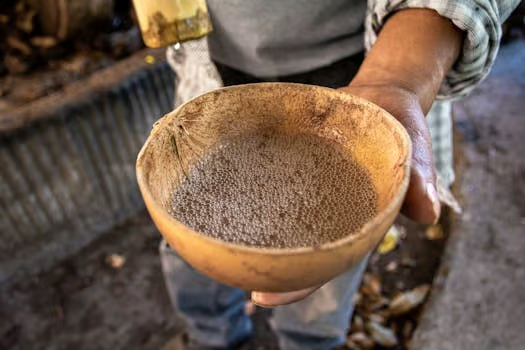
Kava has a long history of traditional use in the Pacific, where it has often been consumed in social and ceremonial settings. In modern use, many people report that kava feels calming rather than reinforcing in a way that pushes them to keep taking more and more. In fact, some users find that once they reach a certain point, they do not want additional servings. That pattern differs from substances that strongly drive repeated dosing.
Still, individual responses vary. Frequency of use, serving size, product quality, and personal history all matter. Someone with a tendency toward compulsive behaviors can turn almost any relaxing ritual into an unhealthy pattern. That is why the best answer is not just whether kava is addictive in theory, but how to use it in a way that keeps your relationship with it balanced, intentional, and easy to stop if needed.
Is kava addictive or habit-forming?
Is kava addictive? Current understanding and user experience suggest that kava is not typically classified as an addictive substance. It does not usually produce the kind of rapid reward loop that drives compulsive redosing, and many users do not report classic addiction markers such as powerful cravings, inability to cut back, or severe withdrawal symptoms after stopping. This is one reason kava is often discussed differently from substances known for a high abuse potential.
However, saying kava is not typically addictive does not mean it should be treated casually. A person can become psychologically attached to the feeling of relaxation or to the routine surrounding use. For example, if someone starts believing they cannot socialize, sleep, or decompress without kava, that may signal a growing reliance on the ritual even if it does not meet the standard definition of addiction. This matters because patterns of overuse often begin with small assumptions that a product is needed every time stress appears.
There are practical signs that your kava use may be becoming less intentional:
- Using more often than planned or increasing serving size to chase a stronger effect.
- Feeling uneasy without it because the routine has become your only coping tool.
- Prioritizing kava over responsibilities, sleep, hydration, or social obligations.
- Ignoring side effects such as grogginess, stomach discomfort, or dry skin while continuing daily heavy use.
- Using it automatically instead of deciding consciously when and why you want it.
The key distinction is control. If you can skip it, reduce it, or stop without significant distress, that points away from addiction. If use starts to feel automatic or necessary, it is time to reassess. For most people, moderation, thoughtful scheduling, and attention to how kava fits into the rest of life are enough to keep use from becoming problematic.
What the research and user experience suggest about dependence and withdrawal
Research on kava does not generally place it in the same category as substances known for strong physical dependence. Reports from regular users often describe stopping without the severe withdrawal picture associated with alcohol, opioids, or nicotine. That is an important point for anyone asking whether kava creates a difficult physical need. In most cases, the answer appears to be no, especially when kava is used moderately and not as an all-day, every-day product.
Even so, there can be a transition period if someone has built kava deeply into a daily routine. What they notice may be less about physical withdrawal and more about the absence of a familiar evening signal. A person who always drinks kava after work may feel temporarily restless, bored, or less relaxed when they skip it. Those reactions can come from disrupted habits rather than true substance dependence. This distinction matters because habits are usually easier to change with planning and replacement routines.
Heavy, prolonged use may also bring downsides that encourage a break. Some users report feeling less refreshed, noticing digestive discomfort, or seeing dry, flaky skin with sustained high intake. These effects are not the same as withdrawal, but they are signs that use may be too frequent or too heavy. Paying attention early helps prevent a pattern from becoming harder to unwind.
- Test your flexibility: skip planned sessions once or twice per week and note how you feel.
- Track your reason for use: relaxation, stress relief, social ritual, or sleep support.
- Watch for escalation: if your usual amount no longer feels sufficient, reassess frequency before increasing intake.
- Use alternatives on off days: tea, a walk, stretching, music, or a screen-free wind-down routine.
If you can take breaks comfortably, that is strong evidence against addiction. If stopping feels emotionally difficult, the issue may be more about coping style than chemistry, and that is something you can address with structure and better routines.
How to use kava responsibly so it does not become a problem
The best way to keep kava from becoming problematic is to use it with clear boundaries. Responsible use is not just about amount; it is about context, frequency, and self-awareness. People who do best with kava usually treat it as one tool among many for relaxation rather than the only way to feel calm. That mindset lowers the chance of turning a helpful ritual into an automatic dependency-like pattern.
Start by setting a simple personal framework before your next session. Decide when you will use kava, why you are using it, and how much you plan to have. Avoid vague plans like taking it whenever stress hits. That approach can slowly train you to pair every uncomfortable feeling with immediate use. Instead, reserve kava for intentional times and keep non-kava coping options active on the same days.
- Schedule regular off days so your routine stays flexible and you can confirm you are not relying on it.
- Keep servings consistent instead of increasing amount just because you had a stressful day.
- Do not stack it with other intoxicants, especially alcohol, to chase a stronger effect.
- Hydrate and eat appropriately so you can better distinguish normal effects from overuse or poor recovery.
- Rotate relaxation habits such as journaling, breathing exercises, light exercise, or reading.
- Check your motivation honestly: are you choosing kava, or avoiding emotions you do not want to face?
It is also useful to keep a brief log for two weeks. Write down the day, amount, reason for use, and how you felt the next morning. Patterns become easier to spot on paper. If you notice that kava is becoming your default response to stress, social discomfort, or sleep struggles, reduce frequency and strengthen alternative routines first. That practical reset often restores a healthy balance quickly.
When to reconsider your kava use and what to do next
Most people asking whether kava is addictive want to know when normal use crosses into something less healthy. A good rule is to look at function, control, and flexibility. If kava use still fits comfortably into your life, does not interfere with obligations, and can be paused without major distress, that points to a manageable relationship. If it starts to feel necessary, secretive, or difficult to limit, it is time to step back and make changes.
There are several practical warning signs worth taking seriously:
- You feel unable to relax without kava even for a few days.
- You are using it more often than intended or earlier in the day than before.
- You are dismissing side effects because you do not want to cut back.
- Your coping skills have narrowed and stress immediately leads to use.
- You feel defensive about your pattern when friends, family, or your own notes raise concerns.
If any of these apply, take a structured reset rather than waiting for the pattern to deepen. First, choose a short break or a reduced schedule for one to two weeks. Second, replace the time and ritual with something specific, not just willpower. Prepare an evening routine with a shower, herbal tea, stretching, or a walk. Third, remove ambiguity by deciding in advance which days are kava-free. Fourth, note whether your stress, sleep, or mood issues are actually the main problem. If they are, address those directly instead of leaning on kava as the only solution.
For most users, this kind of reset is enough to restore perspective. The central question is not only can kava be habit-forming for some people, but whether your use remains deliberate and easy to stop. If the answer is yes, that strongly suggests you are dealing with a manageable routine rather than addiction.
Shop Premium Noble Kava
Explore lab-tested noble kava root, instant kava, capsules, and tinctures — sourced from Hawaii, Fiji, Vanuatu, and the Solomon Islands, with full kavalactone transparency.
Shop Kava →